Cracking (chemistry)
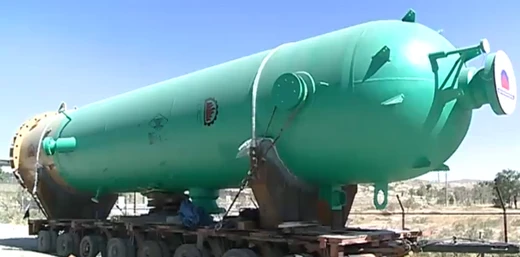
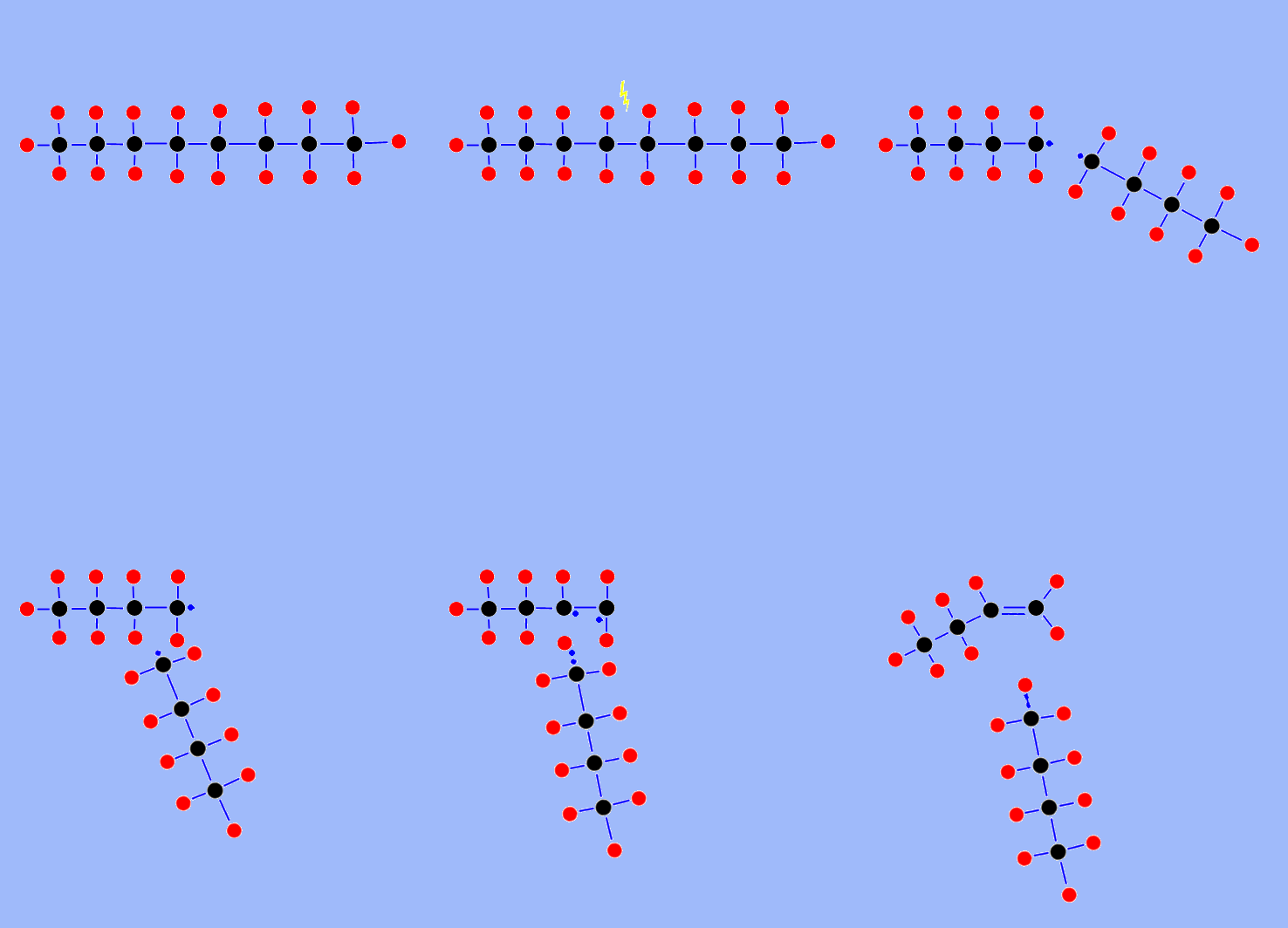
Cracking breaks large hydrocarbons into smaller, more useful molecules.

Wikimedia Commons · CC BY 4.0
Cracking is a chemical process in which complex organic molecules, such as kerogens or long-chain hydrocarbons, are broken down into simpler molecules like light hydrocarbons by breaking carbon–carbon bonds. The rate and products depend strongly on temperature and the presence of catalysts. In petrochemistry, it is used to convert large hydrocarbons into smaller, more useful alkanes and alkenes, requiring high temperatures. Outside petroleum chemistry, the term also describes any splitting of molecules under heat, catalysts, or solvents, as in destructive distillation or pyrolysis.
- field
- Petrochemistry, petroleum geology, organic chemistry
- known_for
- Breaking down complex hydrocarbons into simpler, useful products such as petrol, LPG, jet fuel, diesel, and naphtha
- key_variants
- Thermal cracking, steam cracking, fluid catalytic cracking, hydrocracking
Lore & Background
Among thermal cracking methods, Vladimir Shukhov, a Russian engineer, invented and patented the first in 1891 (Russian Empire, patent no. 12926, November 7, 1891). One installation was used to a limited extent in Russia, but development was not followed up. In the first decade of the 20th century, American engineers William Merriam Burton and Robert E. Humphreys independently developed and patented a similar process as U.S. patent 1,049,667 on June 8, 1908, with the advantage that both the condenser and boiler were continuously kept under pressure. Earlier versions were batch processes, and many patents followed in the US and Europe, though not all were practical.
Reader's Guide
In 1924, a delegation from the American Sinclair Oil Corporation visited Shukhov, apparently wishing to suggest that the Burton and Humphreys patent, used by Standard Oil, was derived from Shukhov's patent. If established, this could strengthen rival American companies seeking to invalidate the Burton–Humphreys patent. Shukhov satisfied the Americans that Burton's method closely resembled his 1891 patents, though his own interest was to establish that the Russian oil industry could build cracking apparatus without being accused of borrowing. At that time, after the Russian Revolution and Civil War, the Soviet Union was desperate to develop industry and earn foreign exchange, and eventually obtained much technology from foreign companies, largely American. Fluid catalytic cracking soon replaced most purely thermal cracking processes in fossil fuel processing, though thermal cracking remains important for producing naphtha, gas oil, and coke, with later developments including visbreaking, steam cracking, and coking.
Did You Know?
- Vladimir Shukhov invented and patented the first cracking process in 1891 (Russian patent no. 12926).
- William Merriam Burton and Robert E. Humphreys patented a similar process in 1908 (U.S. patent 1,049,667).
- Fluid catalytic cracking produces a high yield of petrol and LPG, while hydrocracking is a major source of jet fuel, diesel fuel, naphtha, and LPG.
- Steam cracking operates at around 850 °C and uses residence times as short as milliseconds to improve yield.
The Millisecond Furnace: How Steam Cracking Shatters Molecules
Steam cracking is fundamentally about taking large, saturated hydrocarbon molecules and shattering them into smaller, often unsaturated fragments using extreme heat. The feedstock—whether naphtha, liquefied petroleum gas, ethane, propane, or butane—is blended with very hot steam and injected into a furnace where it is heated to roughly 850 °C in the complete absence of oxygen. What makes the process remarkable is its speed: the residence time inside the furnace is measured in milliseconds, and the gas flow rates approach the speed of sound. This rapid, violent thermal event breaks carbon-carbon bonds, yielding small olefins like ethene and propene along with hydrogen. The moment the target temperature is reached, the cracked gas must be quenched almost instantly—either in a transfer-line heat exchanger or a quenching header using quench oil—to freeze the reaction and prevent the fragments from decomposing further into elemental carbon and hydrogen. This millisecond-scale window is what separates useful chemical products from useless soot.
Severity, Feedstock, and the Coke Problem
The exact mix of chemicals a steam cracker delivers is governed by a delicate balance of feed composition, the hydrocarbon-to-steam ratio, cracking temperature, and furnace residence time. Lighter feeds such as ethane, LPG, and light naphtha channel the output predominantly toward small alkenes—ethylene, propylene, and butadiene. Heavier feeds, including full-range and heavy naphthas or other refinery streams, still produce those olefins but also generate aromatic-rich fractions and hydrocarbons suitable for gasoline or fuel oil blending. Operators tune the so-called severity of the run: pushing the temperature higher skews the product slate toward ethene and benzene, while a milder setting enriches propene, C4 hydrocarbons, and liquid by-products. A persistent nuisance is the slow deposition of coke—a hard carbon layer—on furnace coil walls, which erodes thermal efficiency. Because no design fully eliminates it, each furnace must be taken offline every few months for a decoking cycle, during which steam or a steam-air mixture is blown through the coils to oxidize the carbon into carbon monoxide and dioxide before the unit returns to service.
Peeling the Cracked Gas: The Separation Cascade
Once the cracked gas leaves the quench system, it enters a long, multi-stage separation train that progressively peels off molecules by carbon number. Three stages of primary compression raise the pressure, after which acid-gas removal strips out hydrogen sulfide and carbon dioxide. A second compression step and a drying stage prepare the gas for cryogenic treatment near −157 °C, where hydrogen is split from methane—recovery of that methane is vital to the plant's economics. The remaining stream flows through a demethanizer, then a deethanizer, a depropanizer, and a debutanizer tower in sequence. Each tower's overhead captures one carbon-number fraction while the bottoms pass onward. Safety and selectivity demands intervene at several points: the C2 stream may be partially hydrogenated if acetylene partial pressure threatens to exceed 200 kPa, and the C3 stream is hydrogenated to convert methylacetylene and propadiene before splitting. Ethane from the C2 splitter and propane from the C3 splitter are recycled back to the furnaces for re-cracking, closing a material loop within the plant.
Self-Sufficient Steam and a 300-Million-Tonne Carbon Price
Steam cracking is among the most energy-intensive chemical processes in industry, yet a well-designed ethylene plant is largely self-sufficient in steam. The bulk of the heat carried by the cracked gas exiting the furnaces is captured and used to generate high-pressure steam at roughly 8,300 kPa. That steam drives the massive turbine trains: a 34,000 kW cracked-gas compressor, a 22,000 kW propylene refrigeration compressor, and an 11,000 kW ethylene refrigeration compressor in a typical world-scale unit producing around 680 kilotonnes of ethylene per year. Once the plant is running, it does not need to import external steam. However, this energy intensity carries a heavy carbon cost. For every tonne of ethylene produced, one to 1.6 tonnes of carbon dioxide are emitted, depending on the feedstock. Globally this translates to well over 300 million tonnes of CO₂ released each year, with 70 to 90 percent of that total directly attributable to the combustion of fossil fuels within the process.
Gallery

Frequently Asked Questions
Who is Cracking (chemistry)?
Cracking is a core chemical process in petrochemistry that dismantles heavy, long-chain hydrocarbon molecules into shorter, lighter ones by severing carbon–carbon bonds. It serves as the foundational step for turning bulky raw feedstocks into everyday fuels and chemical building blocks.
What are Cracking (chemistry)'s powers/role?
Its primary ability is to break apart complex organic structures—whether kerogens or heavy petroleum fractions—into smaller alkanes and alkenes. The process is driven by extreme heat and, in many configurations, catalytic agents that lower the activation energy needed for bond cleavage.
How does Cracking (chemistry)'s story end?
The final output is a blend of lighter, commercially valuable molecules such as gasoline-range alkanes, olefins for plastics, LPG, jet fuel, diesel, and naphtha. The exact product slate shifts depending on operating temperature, pressure, and whether a catalyst is in play.
Why is Cracking (chemistry) important?
Without cracking, the petroleum industry could not convert heavy, less-desirable feedstocks into the high-demand lighter fuels and chemical feedstocks that power transportation and manufacturing. It sits at the intersection of petrochemistry, petroleum geology, and organic chemistry as a whole.
What are Cracking (chemistry)'s key variants?
The main forms include thermal cracking (pure heat-driven), steam cracking (using superheated steam), fluid catalytic cracking (employing a circulating solid catalyst), and hydrocracking (adding hydrogen alongside a catalyst). Each variant tunes the product distribution and operating conditions to suit different downstream needs.
More in Chemical Reactors And Processes 1-24
Elsewhere in the Chemical Reactors And Processes universe
Spotted an error? Know more?
This is a living reference — every entry is fact-audited, and reader corrections feed straight into our audit queue. Suggest an edit · See this site's audit record