Electrophoresis
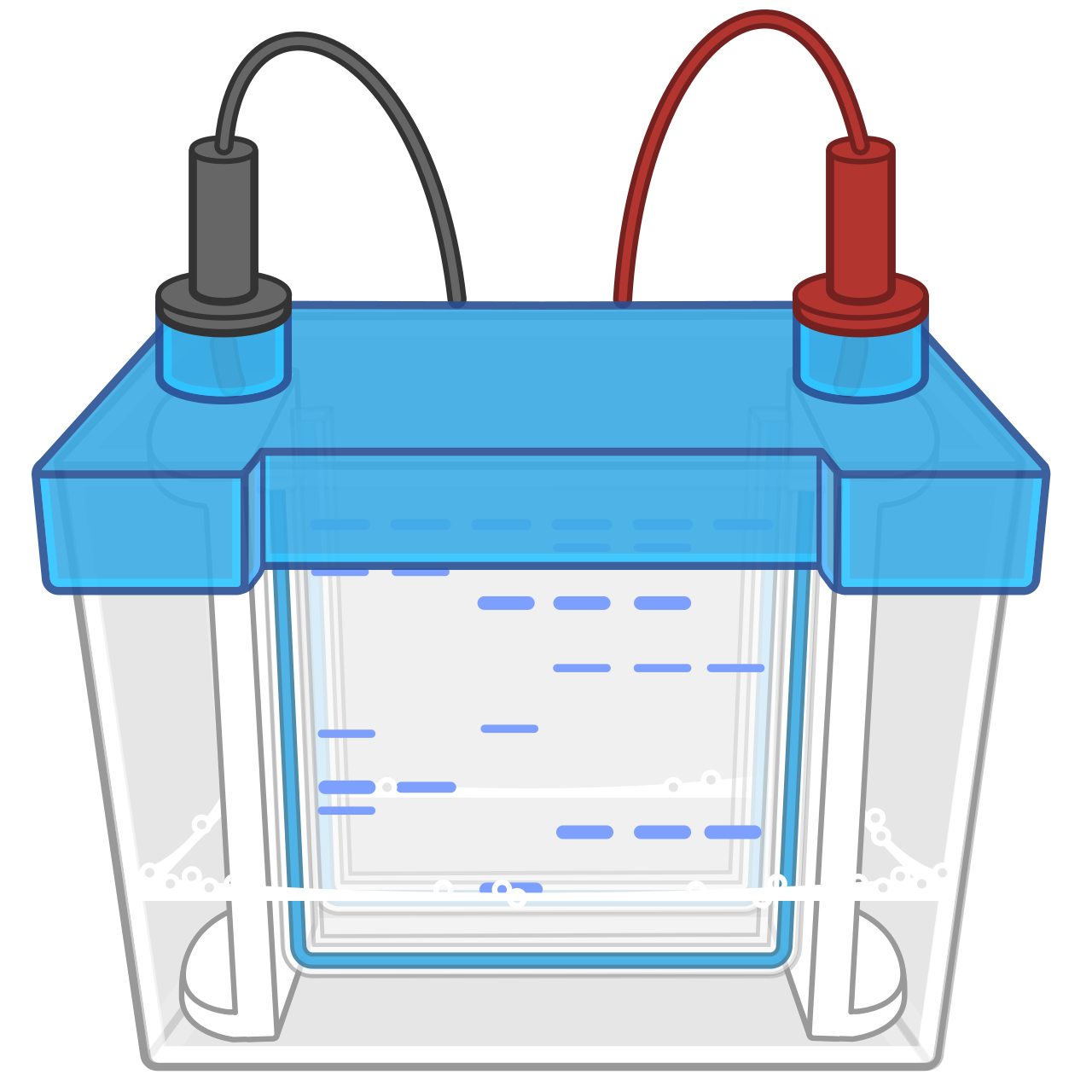
Electrophoresis separates charged particles using an electric field.

DataBase Center for Life Science (DBCLS) · CC BY 4.0
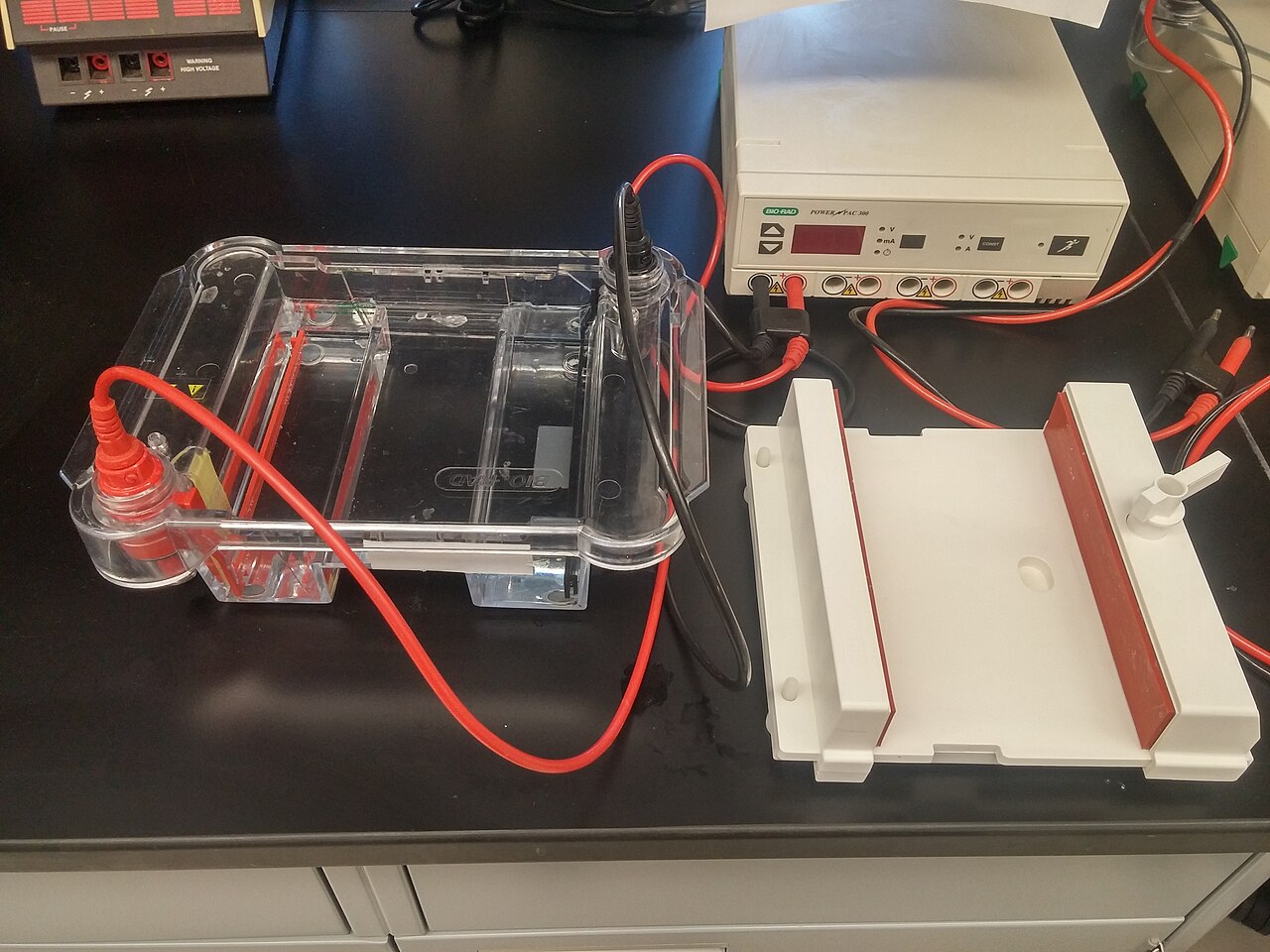
Electrophoresis is the motion of charged dispersed particles or dissolved charged molecules relative to a fluid under the influence of a spatially uniform electric field. These particles and molecules may carry a net positive or negative charge, often characterized with zeta potential. Electrophoresis is used in laboratories to separate macromolecules based on their charges; anionic molecules migrate toward the positively charged anode, while cationic molecules move toward the negatively charged cathode. It is the basis for analytical techniques in biochemistry and molecular biology to separate particles, molecules, or ions by size, charge, shape, or binding affinity.
- field
- Physical chemistry, biochemistry, molecular biology
- known_for
- Separation of charged particles and molecules using an electric field
- key_theory
- Smoluchowski theory (1903) and Hückel theory for electrophoretic mobility
Lore & Background
Electrophoresis involves suspended particles with an electric surface charge, strongly affected by surface adsorbed species, on which an external electric field exerts an electrostatic Coulomb force. According to double layer theory, all surface charges in fluids are screened by a diffuse layer of ions with opposite sign. The electric field also exerts a force on ions in the diffuse layer, part of which is transferred to the particle surface through viscous stress, known as electrophoretic retardation force. When the electric field is applied and the charged particle is at steady movement, the total resulting force is zero: F_tot = 0 = F_el + F_f + F_ret.
Reader's Guide
Electrophoresis is a foundational technique in biochemistry and molecular biology, enabling the separation of DNA, RNA, and proteins based on charge, size, shape, or binding affinity. The most widely used theory, developed by Marian Smoluchowski in 1903, relates electrophoretic mobility to zeta potential, dielectric constant, and viscosity, valid for thin double layers where particle radius is much greater than Debye length. For thick double layers, Erich Hückel's theory applies. Modern rigorous theories, such as those by Overbeek, Booth, and Dukhin–Semenikhin, incorporate surface conductivity and are valid for any zeta potential. The Poisson-Nernst-Planck-Stokes equations model complex scenarios. Liquid droplet electrophoresis differs from particle electrophoresis due to mobile surface charge and nonrigidity of the interface.
Did You Know?
- Electrophoresis of positively charged particles is sometimes called cataphoresis, while that of negatively charged particles is called anaphoresis.
- The Smoluchowski theory is valid only for sufficiently thin double layers, when particle radius a is much greater than the Debye length (aκ ≫ 1).
- Liquid droplet electrophoresis differs from classic particle electrophoresis due to mobile surface charge and nonrigidity of the interface.
- The electrophoretic mobility μ_e is defined as drift velocity v divided by electric field strength E.
The Core Principle of Differential Migration
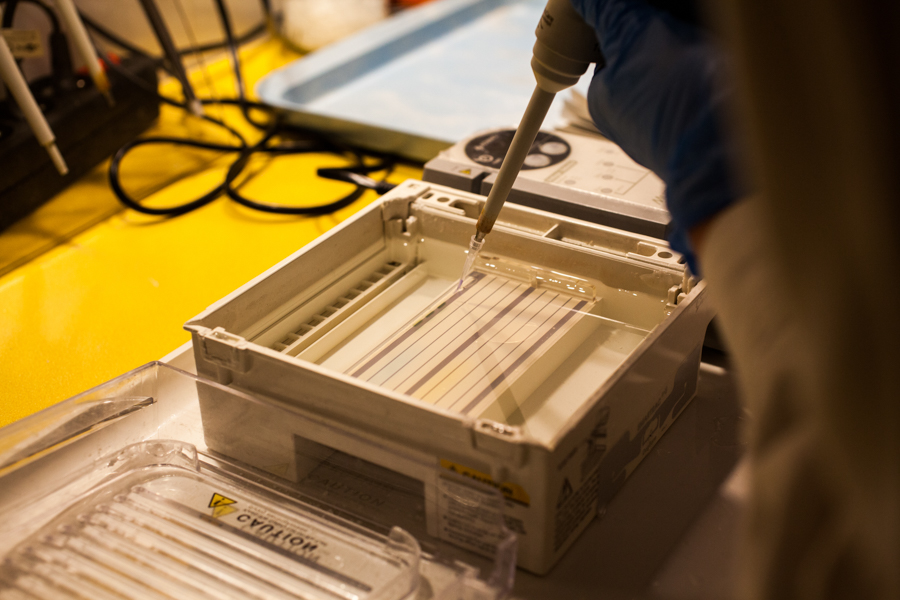
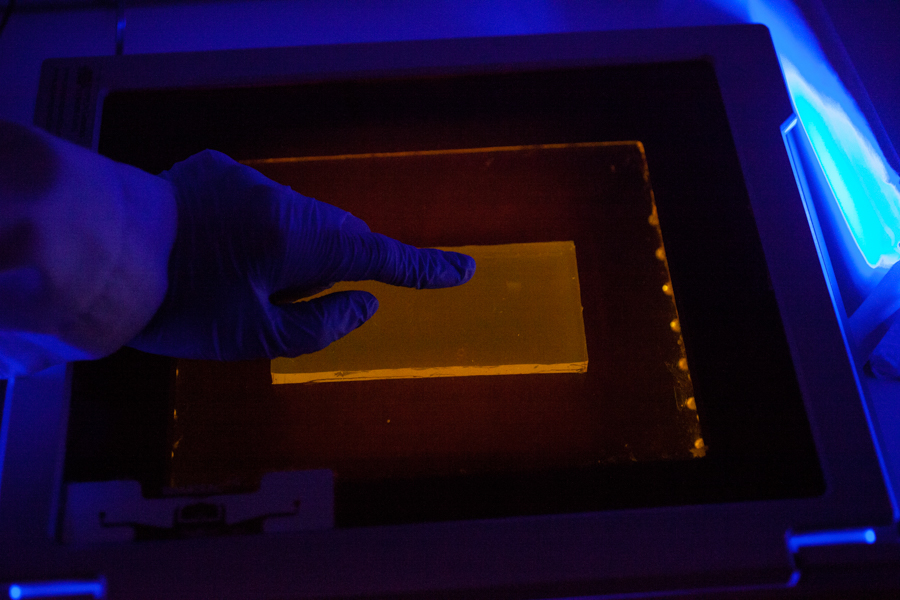
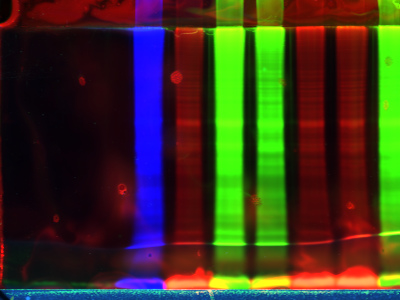
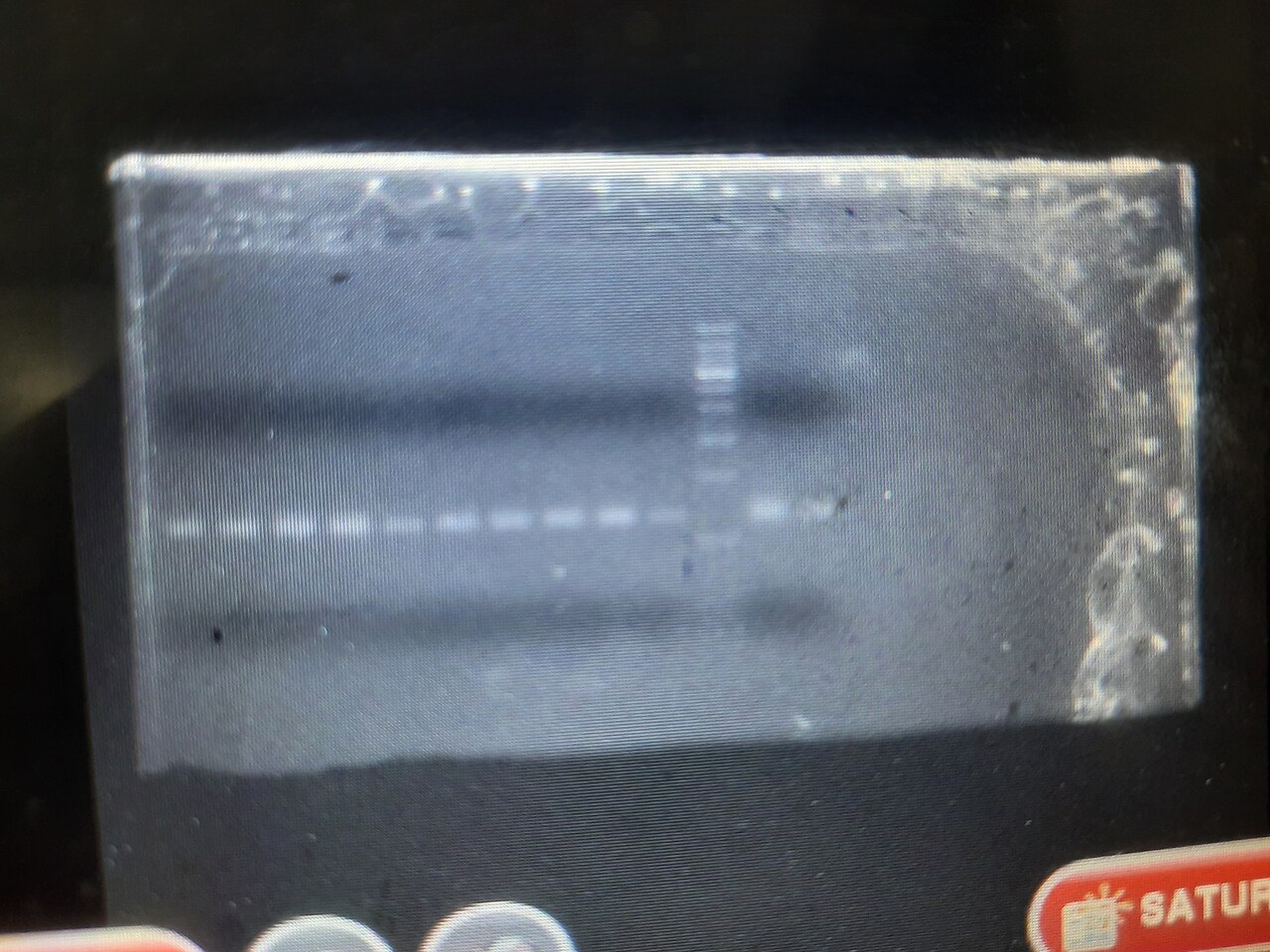
Electrophoresis operates on the principle that organic molecules interact differently with a gel medium when subjected to an electric potential, causing them to travel at distinct rates. This differential migration is what allows the technique to resolve a complex mixture into its individual components. Like all separation processes, electrophoresis exploits inherent differences between constituents—whether those differences involve charge, size, shape, or chemical affinity. The electric field serves as the driving force, while the gel matrix acts as the separating medium through which molecules navigate at varying speeds. This makes electrophoresis an energy-based separation, since it relies on the application of an external potential rather than the addition of a material agent to induce the split. The result is that a single applied voltage can untangle a tangled solution of biomolecules into discrete bands, each representing a fraction enriched in a particular constituent.
Analytical Versus Preparative Roles
Electrophoresis can serve two fundamentally different purposes depending on the goal of the experiment. In an analytical application, the objective is simply to identify and characterize the fractions present in a mixture—determining the size and proportion attributable to each component—without any intention of physically harvesting those fractions. In a preparative context, by contrast, the separated fractions are collected and prepared for downstream processes that benefit from having components isolated from one another. The scale of operation can range from a small laboratory bench setup designed for analytical inquiry to a much larger industrial installation. Because natural elements and compounds are impure to some degree, separation techniques like electrophoresis become essential steps before raw materials can be put to productive use in the modern industrial economy.
A Place Among the Separation Toolbox
Electrophoresis occupies a specific niche within a vast family of separation techniques. Alongside methods such as chromatography (including HPLC, gas chromatography, and affinity chromatography), distillation, centrifugation, crystallization, and filtration, electrophoresis offers a distinct mechanism: the differential travel of organic molecules through a gel under electric potential. Where centrifugation exploits density differences and distillation relies on varying boiling points, electrophoresis leverages the interplay between molecular charge and a gel matrix. A related variant, capillary electrophoresis, extends the principle into a different physical configuration. When no single separation method can achieve the desired purity, multiple operations are often combined in sequence. Electrophoresis can thus serve as one link in a cascade, complementing other techniques to reach a target level of resolution that no single method could accomplish alone.
Complete and Incomplete Separation Outcomes
Not every application of electrophoresis demands absolute purity of a single component. In a complete separation, the goal is to isolate one constituent entirely from all others—analogous to producing pure aluminum metal from bauxite ore through electrolysis refining. In an incomplete separation, the output is itself a mixture, but one that is more valuable or useful than the starting material, much like crude oil refining, where the feedstock is split into natural gas, gasoline, and chemical feedstocks, none of which are pure substances. Electrophoresis can serve either role. In many biological and chemical workflows, a series or cascade of separations is necessary to reach the desired end products. Each step in the cascade produces a different product or intermediate, and the choice between complete and incomplete separation at each stage depends on the ultimate purpose—whether analytical identification or preparative collection of enriched fractions.
Gallery
Frequently Asked Questions
Who is Electrophoresis?
Electrophoresis is the process by which charged particles or dissolved molecules drift through a fluid when a uniform electric field is applied. It occupies a central niche at the crossroads of physical chemistry, biochemistry, and molecular biology.
What are Electrophoresis's powers and role?
Its signature ability is sorting macromolecules by charge, driving anionic species toward the anode while the cathode supplies the negative driving force. The quantitative behavior of each migrating particle is described by classical frameworks such as Smoluchowski's 1903 theory and the Hückel theory of electrophoretic mobility.
How does Electrophoresis's story end?
Rather than a single finale, Electrophoresis keeps running as the backbone of analytical workflows in molecular-biology and biochemistry laboratories worldwide. Its recurring 'ending' is the clean, resolved separation of a complex mixture into identifiable bands or peaks.
Why is Electrophoresis important?
It gives researchers a straightforward, non-destructive way to distinguish molecules purely by charge and size, making it indispensable for DNA, protein, and other macromolecular analyses. Without it, many modern diagnostic and research pipelines in molecular biology would simply not function.
Who are Electrophoresis's key allies?
Its theoretical backbone rests on Smoluchowski's 1903 formulation and the Hückel theory, which together link zeta potential and particle dimensions to electrophoretic mobility. In the lab, it also depends on a supporting cast of the cathode, the anode, and the surrounding buffer medium.
More in Chemical Reactors And Processes 25-29
Elsewhere in the Chemical Reactors And Processes universe
Spotted an error? Know more?
This is a living reference — every entry is fact-audited, and reader corrections feed straight into our audit queue. Suggest an edit · See this site's audit record